
Seasonal Pruning Guide for British Native Shrubs
Timing Is Everything
British native shrubs are forgiving plants. Most will shrug off a rough cut, throw out new growth and carry on feeding the bees and the birds. But prune at the wrong moment and you can strip a shrub of its blossom, its berries, or the dense shelter a nesting blackbird was counting on. Get the timing right and you will be rewarded with more flowers, better autumn colour and a far richer larder for wildlife — usually with less work than you expected.
The rule of thumb that serves best in a British garden is this: prune shrubs that flower on last year's growth straight after they finish flowering, and prune those that flower on the current season's growth in late winter, while they are still dormant. The rest is detail — useful detail, but detail.
Late Winter: Hazel, Hawthorn and the Dormant Crowd
Hazel and hawthorn are the backbone of a British hedgerow, and both are best tackled between mid-January and the end of February, before the sap rises and before birds begin nesting in earnest. Cutting now gives them the whole growing season to heal and regrow.
- Hazel (Corylus avellana) — hazel responds beautifully to coppicing and to hard renovation. Take out the oldest, thickest stems at ground level every few years, or cut back to a low framework of two or three buds. The catkins you see in February are male flowers, and thinning the stems now will not spoil the show on those you leave. The nuts that follow are gold for squirrels, jays and dormice.
- Hawthorn (Crataegus monogyna) — lightly thin the framework and trim hedges now. Resist the urge to clip a hawthorn hedge into a tight box; a slightly ragged, flowering top produces the haws that redwings and fieldfares strip in November. If you are laying a hedge, this is the season for it.
- Elder (Sambucus nigra) — flowers on the current season's growth, so cut back hard in late winter to encourage strong new stems and plenty of elderflowers for cordial and for the birds.
- Dog rose (Rosa canina) — if it needs shaping, do structural work now while dormant, then leave it alone to flower and set hips.
Use sharp, clean secateurs and a pruning saw for anything thicker than your thumb. Aim to cut just above an outward-facing bud, at a slight angle, so rain runs off the wound rather than into it.
Spring-Flowering Shrubs: Prune After the Petals Fall
Shrubs that flower on wood made the previous year — the ones that light up April and May — should be pruned immediately after flowering, usually from late May into June. Cut earlier and you are simply removing buds that formed all through last summer.
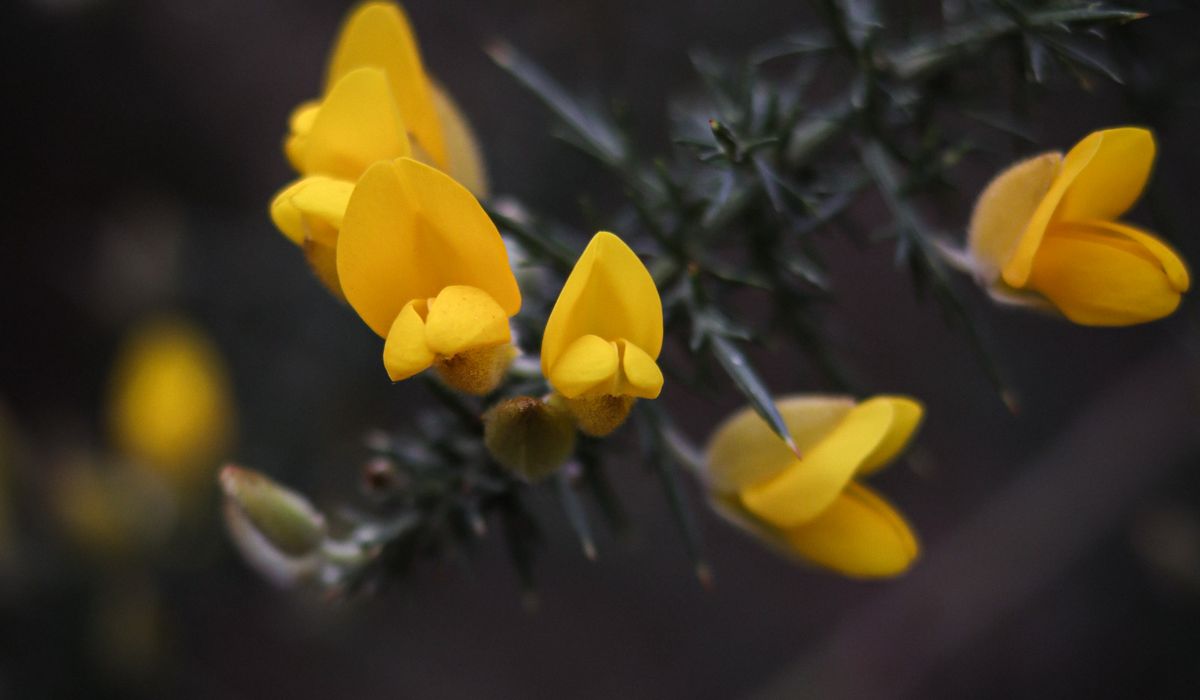
- Gorse (Ulex europaeus) — trim lightly after the main flush to keep it dense and prickly, which is exactly what small birds want for nesting. Never cut back into old, bare wood; it rarely regrows.
- Broom (Cytisus scoparius) — deadhead and lightly tip back after flowering. Hard pruning into old wood is usually fatal, so keep it to the soft growth.
- Dog rose and wild privet — trim after flowering if you want a tidy shape, but leave enough hips and berries behind for the thrushes and blackcaps.
Pruning in a Coastal Garden
Coastal gardens ask something extra of both gardener and plant. Salt-laden wind, gritty soil and exposed positions mean that pruning is as much about building resilience as about shape.
Keep a dense, windward face on your shrubs rather than a tightly clipped one. A bushy, slightly loose outline breaks the wind far better than a hard-edged hedge, and it gives birds somewhere to sit out a gale. Time your cutting so that fresh, soft regrowth is not exposed to the worst of the winter salt — late winter cutting on a coastal hawthorn or blackthorn is ideal, because the new growth hardens off through a long summer.
Sea buckthorn (Hippophae rhamnoides), gorse, hawthorn and wild privet all cope well with salt spray. Sea buckthorn spreads by suckers, so if you must cut it, do so in late winter and be prepared to pull up runners. Remember that sea buckthorn is dioecious: you need both a male and a female plant if you want the orange berries that fieldfares love.
Avoid high-nitrogen feeds, which push out soft growth that winds shred. A mulch of well-rotted compost or seaweed around the root zone, applied in early spring, is plenty. Stake or firm in newly planted shrubs so they cannot rock in the wind, and water them well through their first two summers.
Always Check for Nesting Birds First
Before you cut anything, look closely at the shrub in front of you. In the UK it is an offence to intentionally take, damage or destroy the nest of any wild bird while it is in use or being built. That covers everything from a song thrush's mossy cup in a hawthorn to a wren's tucked-away nest in a hazel stool.
Nesting season runs broadly from March to August, sometimes into September for late broods. Walk the hedge or shrub line first, peering into forks and dense centres, and if you find an active nest, stop and come back later. Cutting hedgerows in rotation — a section each year rather than the whole length — leaves undisturbed cover and a continuous supply of flowers and berries. In coastal gardens, where shelter is scarce, this matters even more.
A Simple Year at a Glance
- Mid-January to February: hazel, hawthorn, elder, dog rose structural work; coastal hedging and laying.
- Late May to June: gorse and broom after flowering; any spring-flowering shrub once the petals drop.
- Late summer: light shaping of roses and privet, leaving hips and berries intact where you can.
- Throughout: check for nests before every cut, and keep secateurs sharp.


Sandy soil drains quickly but loses nutrients. Spread well-rotted manure or garden compost each autumn and avoid digging to build structure and water retention.
Choose compact rosemary, thyme, and chives in deep pots. Shelter them behind a screen, water sparingly, and use gritty compost for sharp drainage.
Mix hawthorn, blackthorn, hazel, and field maple for year-round interest. Plant bare-root whips in winter and water well through the first summer.
Set aside ten quiet minutes to notice soil, scent, and birdsong. Leave the phone indoors and let simple garden tasks become a calming daily ritual.