
A Simple Guide to Propagating Native Shrubs
Why native shrubs earn their place in a coastal garden
If you garden within sight or sound of the sea, you already know the rules are different. Salt-laden wind, free-draining soil and late spring gales knock back anything tender, which is precisely why our native shrubs are such good value. Hawthorn, blackthorn, sea buckthorn, guelder rose, spindle, dogwood and wild privet have spent millennia earning their place on British coasts. They shrug off exposure, hold the soil together and, crucially for wildlife, offer the berries, catkins, nectar and dense nesting cover that garden centre exotics rarely match.
Propagating them yourself is inexpensive, satisfying and surprisingly reliable. The method to master is the semi-ripe cutting, taken in late summer. One healthy parent shrub can give you a dozen new plants in an afternoon, and those plants will be genetically identical to the one that has already proved it can cope with your conditions.
What makes a semi-ripe cutting, and when to take it
Semi-ripe means exactly what it sounds like: this season's growth that has firmed up at the base but is still soft and leafy at the tip. The wood should bend without snapping, and the leaves should be fully open and dark green. Push a fingernail into the base of the shoot — it should feel leathery rather than mushy.
In most of the UK the window runs from late July to mid-September, with August the sweet spot. In Cornwall, Pembrokeshire or western Scotland you can often start earlier; in cold, exposed eastern gardens, aim for the first half of August so roots form before the light fades.
Take cuttings in the cool of the morning, from strong, pest-free shoots in full sun rather than shaded, sappy growth. Carry a plastic bag with a damp cloth or a few sheets of damp newspaper and drop the shoots in as you go. Cuttings that wilt before they reach the potting bench root far less readily.
A word on ethics: on private land, ask first. Never dig up wild plants, and never strip a hedge or dune. Take no more than a fifth of the available shoots from any one plant, and only from your own garden, a willing neighbour's, or with proper permission.
Filling your trug: taking the cuttings cleanly
Work on a shaded bench with sharp tools and a clean surface. For each cutting:
- Choose a non-flowering side shoot, roughly 10–15cm long.
- Make the base cut just below a leaf node — the point where leaves join the stem — with a sharp knife or secateurs. A clean cut matters more than a fancy one.
- Strip the lower two-thirds of leaves by running your fingers down the stem, leaving three or four leaves at the top.
- If the leaves are large, as on guelder rose, cut the remaining leaves in half to reduce water loss.
- For stubborn subjects such as gorse or sea buckthorn, shave a sliver of bark from one side of the base to expose more rooting tissue.
Keep varieties labelled as you go. A plant label in the pot saves a winter of guessing.
Hormone, gritty compost and the planting itself
Rooting hormone genuinely helps with woody natives, particularly hawthorn and spindle. Use a powder or liquid and dip only the bottom 1–2cm of the stem. Tap off the excess; a thick clump of powder can rot the base. If you garden organically, a liquid seaweed dip is a gentler alternative, though rooting may take longer.
For compost, aim for something open and free-draining. A reliable mix is equal parts peat-free multipurpose compost and horticultural grit, or half compost and half sharp sand. Fill small pots or a deep seed tray, firm lightly and water before inserting anything.
Make a hole with a dibber or pencil, slide the cutting in so the lowest leaves sit just above the surface, and firm the compost around the stem with your fingers. Space cuttings so leaves barely touch — overcrowding is the quickest route to rot. Water gently and let the pots drain.
Humidity, shade and the waiting game
Your cuttings now need two things: constant humidity around the leaves and no direct sun on the pot. A propagator with a vent is ideal. Otherwise, place a clear polythene bag over the pot, supported by a few short canes so it does not touch the foliage, or stand pots in a closed cold frame in a bright, shaded spot.
Keep the compost just moist — never soggy — and remove any fallen leaves promptly. Vent the cover for a few minutes every few days to swap stale air for fresh, and mist lightly if the leaves look limp. Bottom heat of around 18–21°C speeds things along if you have a heated mat.
Rooting times vary: dogwood and privet may root in four to six weeks, hawthorn and sea buckthorn can take ten to twelve. Test by tugging gently — real resistance means roots. Once rooted, harden the plants off over a fortnight by opening the cover a little more each day.
Potting on and planting into a windy garden
Move rooted cuttings into individual pots of gritty, peat-free compost and grow them on in a sheltered spot or cold frame. Overwinter them there, protecting pots from waterlogging by raising them onto bricks, and plant out the following autumn or spring.
When planting into an exposed coastal garden, give your shrubs the best possible start. Plant in autumn while the soil is warm, dig in plenty of garden compost, and mulch with grit or bark to lock in moisture and suppress weeds. Shelter young plants with a temporary windbreak of netting or brushwood for the first two seasons, stake tall species, and water well through the first summer. Group them in generous drifts rather than dotting them about — a thicket of native shrubs shelters itself, feeds the birds and looks far more at home beside the sea.


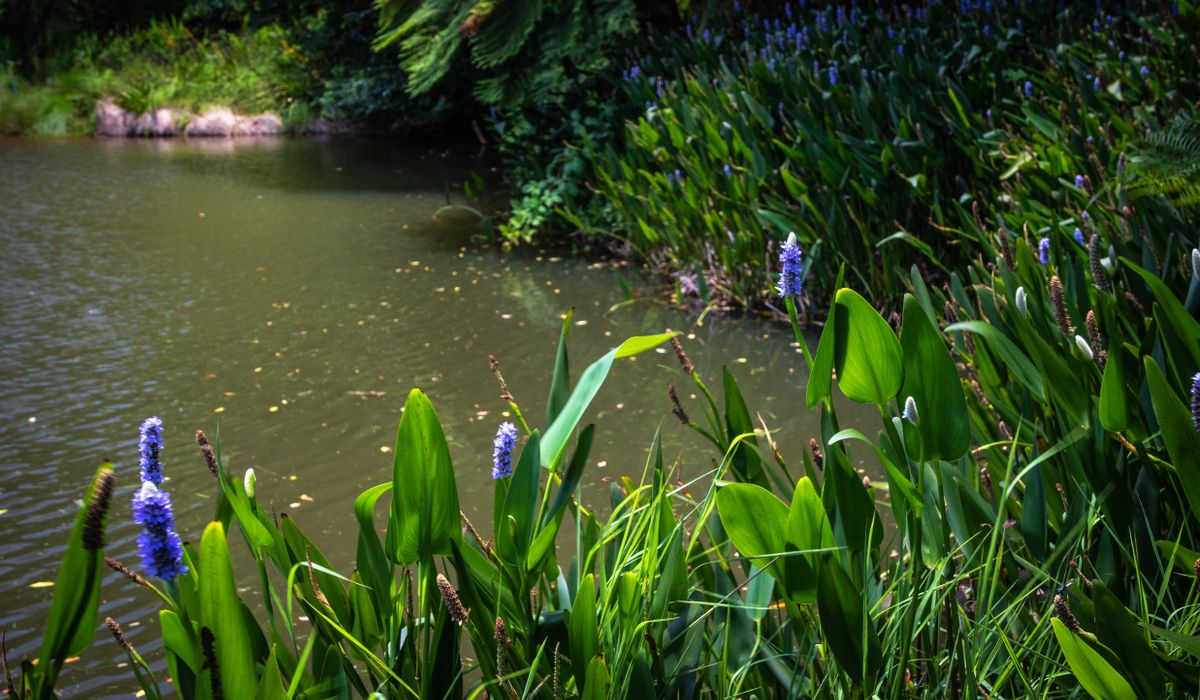
A shallow pond with gentle slopes lets frogs and newts enter safely. Add native oxygenators and leave wild edges for shelter and emerging insects.
Prune hazel and hawthorn in late winter, while spring-flowering shrubs prefer trimming after blooms fade. Always check for nesting birds before cutting.
Sea thrift, sea campion, and tamarisk cope with salt spray and strong winds. Plant in groups, mulch with gravel, and water deeply during dry spells.
Sandy soil drains quickly but loses nutrients. Spread well-rotted manure or garden compost each autumn and avoid digging to build structure and water retention.